
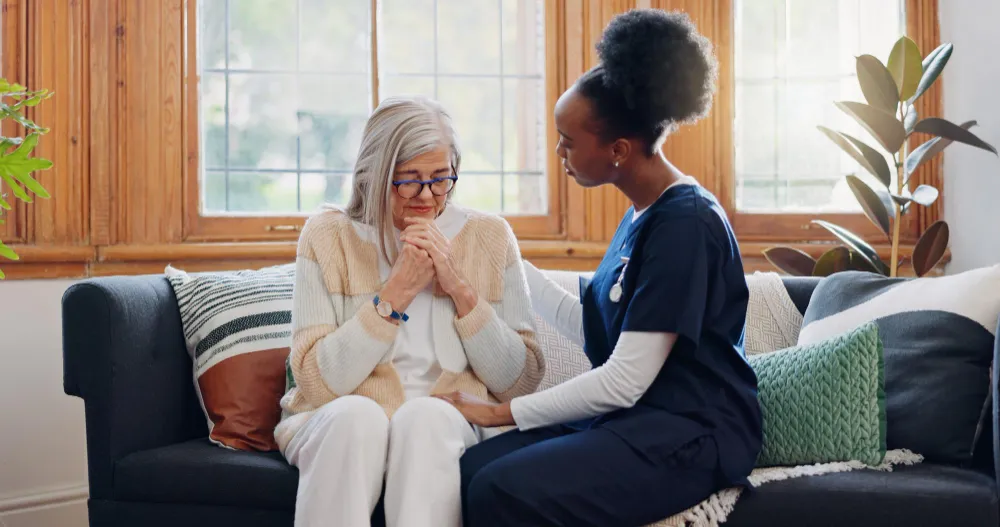
Nearly one in four older adults deals with mental health issues like depression or anxiety, but it often goes unnoticed. You might just think your parent is “slowing down” or getting a bit “grumpy” with age.
In reality, they might be feeling deeply lonely or overwhelmed by a house that feels too big and quiet. Seeing someone you love pull away from the world is heartbreaking.
Professional home care is a way to support the mental condition of your loved ones while allowing them to maintain their independence.
In this post, you will learn what mental struggles in seniors actually look like and how home care for seniors with mental health issues can make a massive difference for everyone involved.
Quick Summary
Home care for seniors is about having a dedicated person in the house to help with the difficult stuff. It is not just about medical help. Caregivers act as a social lifeline, keep routines on track, and ensure a senior is eating well and no longer struggling with mental health challenges.
Why Mental Health Struggles Are So Common in Seniors
Aging is not just about physical changes. It is a series of big life shifts that can be really hard to process. Here is why your loved ones suffer from mental health issues in old age:
- The House Gets Too Quiet: When friends pass away or children move far away, the silence in a house can become heavy for them.
- Loss of Control: It is frustrating when they cannot walk to the mailbox or drive to the store anymore. That loss of control hurts.
- Who Am I Now? For people who have worked for 40 years, retirement can feel like losing their identity.
- Brain Chemistry: Sometimes the brain just changes. Aging can cause chemical shifts that make it harder to feel the same as before.
- The “What If” Stress: Many seniors spend their nights worrying about falling or becoming a burden to their kids.
What are the Common Mental Health Conditions That Home Care Can Actually Help with
A caregiver provides additional support and assistance. They help bridge the gap between getting by and actually living well.
Here are the specific areas where we see the biggest improvements with home care:
- Long-term sadness that does not seem to go away.
- The deep anxiety that comes from being alone all day.
- The confusion and fear that start with Alzheimer’s or dementia.
- The “brain fog” that often happens after a long hospital stay.
- Grief that feels too heavy to carry solo.
- Panic about falling or a medical emergency.
- Sudden mood swings or feeling “on edge” for no reason.
- Paranoid thoughts about neighbors or the mail.
How Home Care Can Support the Mental Health Conditions of Your Loved Ones
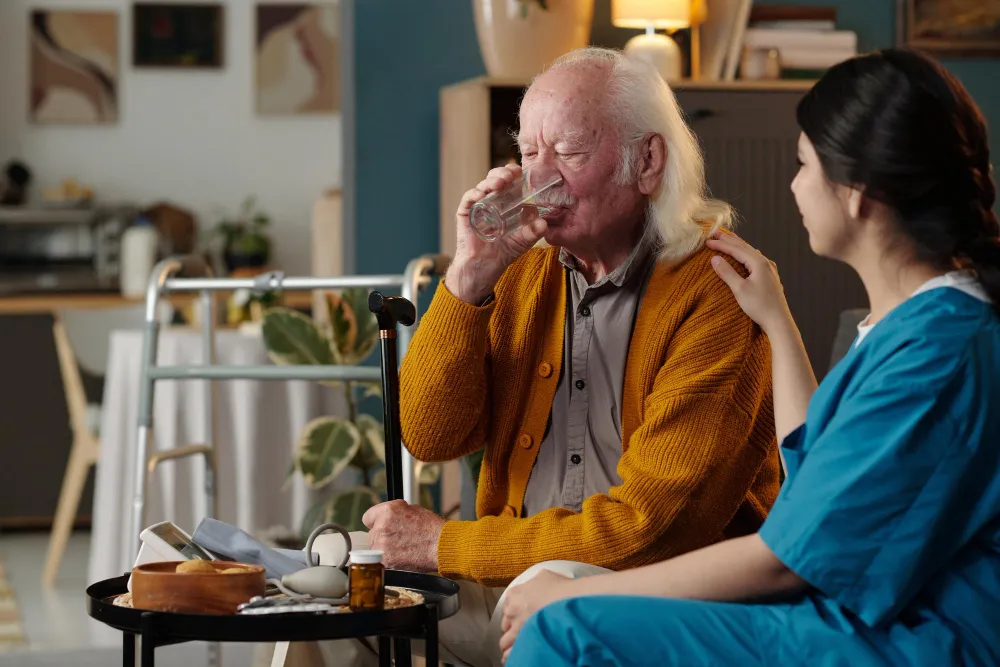
Home care involves more than simply having someone present in the house. Quality support helps seniors feel safe, valued, emotionally connected, and actively involved in daily life.
Here is how it can help your loved ones with mental health:
Breaking the Cycle of Loneliness
Having someone to talk to every single day changes a person’s mental state. Caregivers do have real conversations with them. They listen to the same stories three times and still respond with care.
Home care can motivate your loved one to get out of bed and get dressed. That connection stops a senior from feeling like the world has forgotten them and helps them stay connected to the present.
Building a Psychological Safety Net
Fear is a massive part of senior mental health. When your parents know a caregiver is coming at a set time, that midnight anxiety starts to fade. Caregivers provide a sense of security by:
- Reassuring them that help is always just a few steps away.
- Letting them talk through their grief without feeling like a burden.
- Gently insisting on them trying a hobby again.
- Acting as a calm companion during moments of emotional triggers
Helping Seniors Stay Independent
A good caregiver supports seniors without taking away their independence. If a senior wants to cook, the caregiver chops the vegetables and lets them cook themselves. This assistance keeps your elders’ confidence up because they are still the lead in their own kitchen.
Similarly, a caregiver might set out the clothes and handle the tricky buttons, but the senior still chooses what to wear and dresses themselves. Such independence helps them feel in control of their own lives, and they are less likely to experience low self-esteem.
Building a Proper Routine
When the days all blend together, depression often gets worse. Caregivers bring back the rhythm of a normal life by making sure your parent has breakfast at a regular time and has a clear plan for the afternoon.
That structure is a huge relief for a mind that feels cluttered or confused. It turns a long, empty day into a series of manageable, familiar moments.
Providing Specialized Help for Memory Loss
Dementia is scary. A caregiver who knows how to handle it can keep a senior calm when they get agitated. They know how to redirect a conversation without starting an argument.
This approach helps reduce stress in the home and can prevent evening confusion and agitation, often known as sundowning, from escalating into a serious situation.
Improving Physical Health
Your seniors cannot have a healthy mind if they are not physically healthy. Caregivers handle their physical health well by:
- Making fresh, hot meals that have the nutrients an aging brain needs.
- Helping the senior move—even if it is just a walk to the end of the driveway.
- Making sure medications are taken exactly when they should be.
- Helping with hair, nails, and hygiene so the senior feels like themselves again.
How to Choose the Right Home Care Support for Mental Health Needs
When selecting home care, you are letting someone into your parents’ private world. You cannot just pick the first name on a list. Instead, you should:
- Figure out exactly what the biggest struggle of your loved ones is—is it a memory struggle or just loneliness?
- Look for professionals who actually have experience with the condition your family member is experiencing.
- Let your elders meet the caregivers first. A glowing resume does not matter if they do not click personally.
- Ask how they handle it when a senior is having a “bad day” or gets angry.
- Talk to other families or read local reviews to see how the agency handles long-term care.
Conclusion
Taking care of your seniors’ mental health is just as important as their physical health. It is about making sure their world stays full of meaningful connections.
Home care is a wonderful way to keep them in the house they love while giving them the support they need to actually enjoy life.
But if things get more complicated, an assisted living facility like St. Francis Villa can offer an even larger social circle and more specialized care. We focus on making sure every resident feels at home and is respected every single day in a caring environment.
Contact us to discuss how we can support your family and help your loved one thrive emotionally and physically.
FAQs
How do I know if home care for seniors with mental health issues is actually enough?
Home care is great for staying social and safe, but it has its limits. If your parent is starting to wander at night, forgetting to turn off the stove, or needs 24/7 medical supervision, it might be time to look at a community like St. Francis Villa.
Will I lose my connection with my father if someone else is doing the caregiving?
Actually, it usually works the opposite way. When you stop being the “boss” who has to nag him about his medications or a messy kitchen, you get to be his child again. You can spend your visits just talking and enjoying each other’s company while the caregiver handles the stressful logistics in the background.
Does insurance cover home care?
It depends on a few factors. Long-term care insurance and some veteran benefits are great for these situations. Standard health insurance usually sticks to “non-medical” care. It is worth sitting down with an expert to see what your specific policy actually covers before you start.