
Does your heart race at night, worrying that your aging parent might fall or need help when no one is around? This is a common experience for family caregivers, especially when nighttime brings added risks and uncertainty.
You do not have to manage this burden alone. Many families reach a point where professional assistance becomes a necessity for safety.
In this post, you will learn about the different overnight care options for the elderly and how to choose the right path for your family.
What Is Overnight Elderly Care?
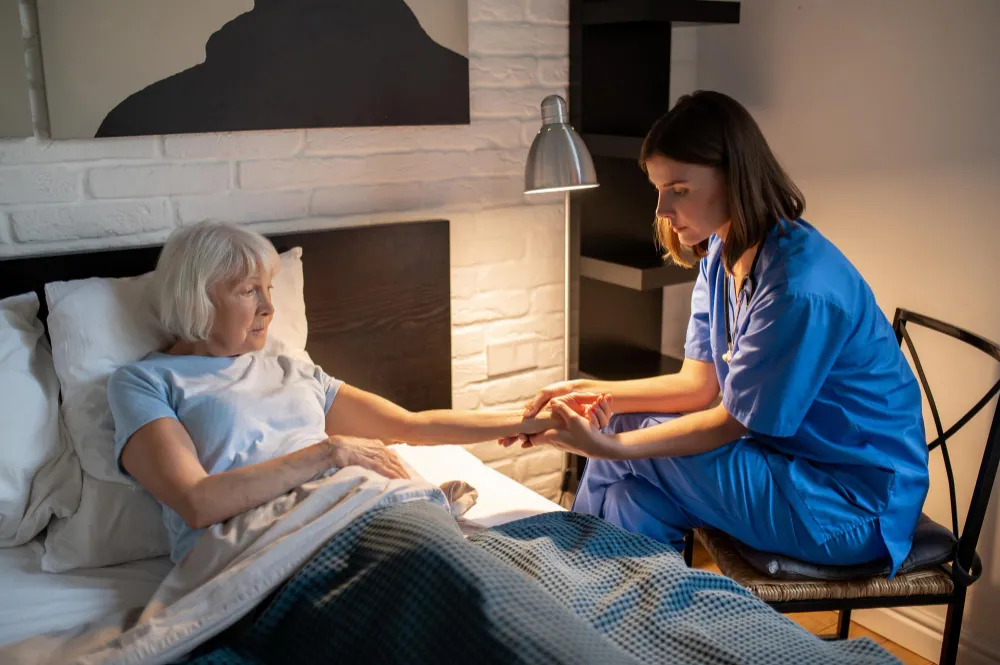
Overnight care provides professional assistance to seniors during the nighttime hours. This service focuses on safety, medication management, and mobility of seniors when the rest of the world is sleeping.
Many seniors experience “sundowning,” which is a state of confusion that begins as the sun sets. Others may have physical limitations that make a simple trip to the bathroom at night dangerous or difficult without assistance. That is why overnight care becomes necessary.
Some specific changes that indicate your loved one requires extra help at night include:
- Frequent falls or stumbles occur in the evening
- Increased anxiety or agitation as night approaches
- Wandering or trying to leave the house at inappropriate hours
- Difficulty getting in and out of bed without help
- Waking up multiple times due to pain or bathroom needs
- Forgetfulness regarding evening medications
What Are Your Main Options for Overnight Care for Elderly Loved Ones

Choosing the best path for your parent starts with a close look at their medical needs and emotional well-being. To help you weigh your choices, here is a breakdown of the primary options of overnight care for the elderly available to families today.
Sleeping Night Care (On-Call Support)
This is a lower level of intervention for seniors who generally sleep well but feel anxious being alone. The caregiver sleeps in a separate room but remains available if an emergency occurs.
You should consider this overnight home care for the elderly if your loved one is mostly independent but needs the security of a human presence. It is often the most affordable home-based option.
However, if the caregiver is woken up more than twice, the service often transitions into a higher pricing tier.
Visiting Overnight Care
This model involves a caregiver checking in at specific intervals. They might arrive at 8:00 PM to assist with the bedtime routine and return at 6:00 AM to help with breakfast.
Visiting overnight care is a good option for seniors who only need help with transitions. The main drawback is that no one is present during the middle of the night if a sudden fall occurs.
Waking Night Care (Active Monitoring)
In this scenario, the professional remains awake for the entire shift. They perform regular rounds and provide immediate assistance.
Such a level of care is vital for individuals with advanced dementia or those who require repositioning in bed to prevent pressure sores.
The top benefits of this level of care are:
- Constant supervision and immediate medical response
- Best option for high-needs patients with chronic conditions
- Management of complex medication schedules throughout the night
But remember, this is typically the most expensive form of at-home care.
Assisted Living with Overnight Support
Moving to a dedicated community offers a different kind of security. Professional staff members are on-site twenty-four hours a day, and these communities provide a structured environment with emergency call systems in every room.
From a financial standpoint, you might find the cost easier to manage because it is typically bundled into a single monthly lease rather than billed as separate hourly charges.
Assisted living is often a great fit for seniors who still want to stay social and active during the day but need to know they are completely safe once the sun goes down.
How to Get Overnight Care for Elderly Loved Ones

Taking the first step toward professional help can feel difficult, but you can navigate this transition smoothly by following a structured process.
Assess Your Loved One’s Needs
First, you must assess the specific needs of your loved one. Observe your parent for some nights or ask their doctor for a formal evaluation. You must determine if they need active medical monitoring or just a companion.
To effectively assess their needs, you should think about the following details:
- The number of times they actually wake up during a typical night.
- Whether they can navigate the hallway safely without stumbling.
- Signs of nighttime confusion or “sundowning” behavior.
Understand Your Care Options
In the second step, you need to understand your care options by researching local providers. Look for agencies or communities that specialize in geriatric care. You should read reviews and talk to other families who have used these services.
Compare Costs and Services
Next, you will need to compare costs and services. The overnight care for elderly cost varies significantly based on your location and the level of skill required.
Home care agencies usually charge by the hour. Active waking care can cost hundreds of dollars per night. In contrast, assisted living communities often provide a more stable financial model.
Here are a few things to keep in mind during your financial review:
- Request a clear, written breakdown of all fees from the provider.
- Ask about holiday rates or unexpected emergency surcharges that might apply.
- Check your parents’ insurance policy to see if it covers the specific service you need.
Evaluate Care Providers Carefully
Then, you should evaluate care providers carefully. If you choose home care, interview the specific person who will be in the house.
If you choose a community, visit during the evening hours. You want to see how the staff interacts with residents when the main administrative office is closed.
Start with a Flexible Plan
Once you evaluate the caregivers, you might find it helpful to start with a flexible plan to see how your loved one adjusts to the change. There is no need to feel pressured into a long-term contract right away. Many families start with just two or three nights a week to see how well the arrangement works.
This kind of gradual start offers a few key benefits:
- It gives your parent time to get used to a new person in their space.
- You get a chance to test the reliability of the agency before committing fully.
- The immediate financial impact on your family budget is much lower.
Involve Your Loved One in the Decision
Finally, you must make sure your loved one feels like they are involved in decision making process. It is very common for seniors to resist help because they fear losing their independence.
Try explaining that this support is actually to help them stay in a comfortable environment for much longer. When you focus on the benefits, like better sleep and less anxiety, they are far more likely to embrace the new routine.
Conclusion
Deciding how to protect a parent during the night is a careful journey. You must balance their physical safety with the emotional comfort of their daily environment.
Overnight care for elderly offers the relief you need while keeping your loved one in a secure space. Whether you opt for a caregiver at home or the full support of a residential community, the ultimate goal is a peaceful night for your entire family.
If you are exploring a supportive and structured environment with around-the-clock care, the team at St. Francis Villa is here to help you take that next step. Our family-owned community in River Ridge focuses on providing a home-like setting where your loved one is treated like a member of our own family. Reach out today to see how our dedicated staff can make a difference in your nighttime peace of mind.